For Schools
Practical film and media training designed around your students.
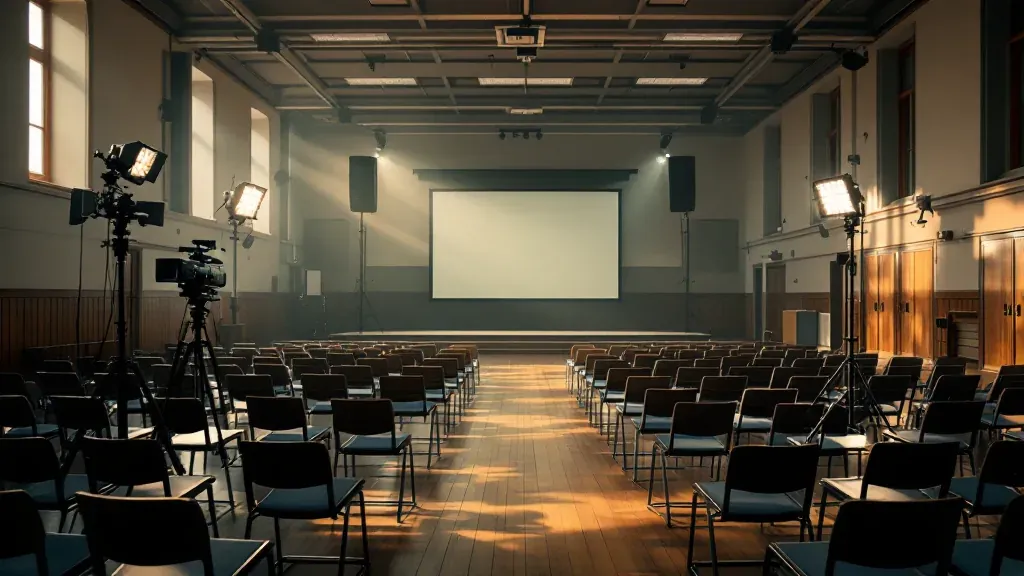
Practical film and media training
I work with schools to bring practical filmmaking, cinematography and creative storytelling into the classroom. Sessions are designed to give students the opportunity to learn through doing: developing ideas, working with cameras and sound, exploring visual storytelling and creating their own work.
Supporting Leaving Certificate Drama, Film and Theatre Studies
The training can support students studying Leaving Certificate Drama, Film and Theatre Studies, while also working as standalone workshops or programmes for students who are developing an interest in film and media. The emphasis is on connecting the concepts students study in the classroom with the practical decisions involved in making and responding to creative work.
Tailored to your school
Every school has different needs. Courses can be tailored around your students’ age, experience, interests, available facilities and the areas you want to develop. This could be a single workshop, a short series of sessions or a longer programme built around a specific project or learning objective.
A practical approach
Students learn through a combination of discussion, demonstration, experimentation and hands-on production. Rather than simply talking about cameras, lighting, storytelling or film language, students get the opportunity to put those ideas into practice and see how creative choices affect the finished work.
Developing skills and confidence
The aim is to give students more than an introduction to film. It is about giving them the skills, confidence and creative experience to make decisions, work collaboratively and see film from a filmmaker’s perspective.
Working with schools in Donegal
Based in Raphoe and working with schools across the county.
Questions schools ask
Who are the courses suitable for?
The courses are designed primarily for secondary school students, from beginners through to students who already have some experience with film and media. They can be adapted to suit different ages, abilities and levels of experience, so a school can choose a course that matches the students' needs. The training is particularly relevant to students studying or considering Drama, Film and Theatre Studies, but the practical filmmaking approach can also work well with students interested in creative media, storytelling, photography or production.
Do students need any previous filmmaking experience?
No. Most of the courses are designed to start with the fundamentals and build students' confidence through practical exercises. Students learn by seeing techniques demonstrated, trying them for themselves and then applying them to their own work. Where a group already has experience, the content can be adjusted to introduce more advanced camera, lighting, storytelling or production techniques.
How practical are the courses?
The emphasis is very much on learning by doing. Students have the opportunity to work with cameras, lighting and sound equipment and to create their own material rather than simply learning theory in a classroom. Depending on the course, they may shoot scenes, develop stories, work on location, experiment with lighting and composition, or take an idea through the filmmaking process from planning to a finished piece.
Can the courses support the Leaving Certificate Drama, Film and Theatre Studies subject?
Yes. The training can be tailored to complement the Leaving Certificate Drama, Film and Theatre Studies specification by connecting classroom theory and analysis with practical filmmaking. Students can explore areas such as film language, genre, mise-en-scène, cinematography, sound, editing, directing, performance and visual storytelling, while also experiencing how these ideas are applied in practice.
Can a course be tailored to our school's requirements?
Yes. The courses are not intended to be a one-size-fits-all programme. Content, duration and practical activities can be adapted around the school's timetable, facilities, student age and existing level of knowledge. A school might want a single workshop, a short programme over several sessions, or a more developed filmmaking project. The aim is to work with the school to create training that fits its particular requirements.
What will students take away from the training?
Students will gain more than just technical knowledge. They will develop practical filmmaking skills alongside creativity, communication, teamwork and the ability to make informed visual decisions. Depending on the course, they may also produce their own short film, scenes, photographs or other practical work. Most importantly, the training is designed to give students a better understanding of how professional filmmakers approach storytelling, make creative decisions and work together to turn an idea into something they can see on screen.
The practical side
In your school
Courses are held on school property during school hours. Anything outside school is arranged to suit the school’s location.
Your equipment, your group
Schools have the equipment needed; anything extra is arranged case by case. Group size is your call, from a talk to a full year to a practical course with three or four students.
Leaving Cert and Transition Year
Built for Drama, Film and Theatre Studies, and open to Transition Year groups where a school wants it. Garda vetted and fully insured.
Bring film and media into your school
If you are interested in bringing practical film and media training into your school, get in touch to discuss what would work best for your students.
Contact Emmet